
"natural pesticide"
1000 article(s) found

A brief introduction to the planting market price of Ecuador's boutique coffee beans with fresh taste
When it comes to Ecuadorian coffee, we have to mention the organic coffee in the Galapagos Islands of Ecuador. The Galapagos Islands is a famous tourist attraction, declared as a World Natural Heritage site by the United Nations Educational, Scientific and Cultural Organization (UNESCO). It is extremely rich in products, and organic coffee is a unique one of them. The local fertile volcanic soil, micro-climate and other unique ecological environment, coupled with its lack of

Yemeni coffee grains of China Coffee Network are small and heavy.
Yemeni coffee originated from Arabian coffee trees hundreds of years ago, all of which are produced in areas above 3000 feet above sea level. For hundreds of years, the unique planting and production methods of Yemeni coffee have remained almost unchanged. The seedlings of Yemeni coffee trees are first cultivated in nurseries and then transplanted to high elevations. Pesticides and fertilizers are not used in the breeding process. Mature coffee beans are naturally dried on coffee trees and shelled by stone mill.

A brief introduction to the unique aroma of Santa Cruz Manor Flavor Coffee beans
Ecuador's superior geographical location, fertile soil and special climatic conditions have created a favorable natural environment for coffee cultivation in the country. Ecuador is one of the few countries in the world that can produce both Arabica coffee beans and Robusta coffee beans. San Cristobal is a larger island in the Galapagos Archipelago, which is 410 meters above sea level.

Introduction to the characteristics of Panamanian kotowa Family Duncan Manor Coffee beans the flavor and taste of Panamanian rose coffee
Professional coffee knowledge exchange more coffee bean information please follow the coffee workshop (Wechat official account cafe_style) Panama Cotova Manor witch brothel sun honey treatment PanamaKotowaKooiFARM* naturally planted pesticide-free chemical fertilizer * flavor performance: Geish

Harald coffee beans harar Ethiopian mocha coffee beans
Ethiopia is the first country in the world to grow coffee and maintain the oldest coffee culture. So far, it is still grown in small-scale families and maintains very traditional and ancient coffee growing techniques and methods, so pesticides and other chemical fertilizers will never be used, so Ethiopian coffee, like Yemeni mocha coffee, is the best choice for those who advocate nature.

A brief introduction to the cultivation of Ecuadorian boutique coffee beans with fresh taste, geographical location, climate and altitude
When it comes to Ecuadorian coffee, we have to mention the organic coffee in the Galapagos Islands of Ecuador. The Galapagos Islands is a famous tourist attraction, declared as a World Natural Heritage site by the United Nations Educational, Scientific and Cultural Organization (UNESCO). It is extremely rich in products, and organic coffee is a unique one of them. The local fertile volcanic soil, micro-climate and other unique ecological environment, coupled with its lack of

How to grow rainforest coffee sun-dried first grade mantinin? What is Rainforest Coffee?
Professional barista exchanges, please pay attention to coffee workshop (Weixin Official Accounts cafe_style ) Rainforest coffee has an amazing high level of quality. Due to the natural shade cultivation method, less chemical fertilizer and pesticide interference, but also to avoid excessive sunlight, so that the quality of coffee beans to achieve the best condition, each mouth has a unique aroma and aftertaste of Mantenin, not bitter and not astringent with a little bit of comfortable acid
A brief introduction to the cultivation of fragrant Ecuadorian boutique coffee beans, geographical location, climate and altitude
In fact, Ecuador means the Spanish equator. Due to the use of old-fashioned traditional harvesting and handling methods, Ecuadorian coffee is not listed as a boutique coffee, so it is generally rarely seen. Ecuador faces the Pacific Ocean, and near the equator, about 900km west of longitude 90 degrees, there is a Galapagos archipelago (Galapagos Island).

Coffee trees to prevent pests Coffee trees are easy to get leaf rust how to prevent oriental fruit flies
Professional coffee knowledge exchange more coffee bean information Please pay attention to the coffee workshop (Wechat official account cafe_style) the human body will inevitably get sick, and plants will also suffer from diseases and insect pests. Of course, coffee trees also have their diseases and insect pests. There are many coffee growers in Taiwan who often assure customers that Taiwan coffee is free from diseases and insect pests and is the safest food. Coffee is a very safe food.

A brief introduction to the market price of Ecuadorian boutique coffee beans with balanced and refreshing taste
St. Cristobal is a larger island in the Galapagos archipelago. At 410m above sea level, there is a small lake called El.Junco, which forms streams along the rocks and volcanic rocks on the southern slope of the island. Mineral-rich fresh water moistens the land of St. Cristobal, keeping the soil moist and fertile. For here.

The most representative coffee in Yemen-mocha coffee the taste of Yemeni mocha coffee beans
For more information on coffee beans, please follow the coffee workshop (Wechat official account cafe_style) Yemen, the birthplace of the coffee words "mocha" and "Arabica". Local farmers adopt the concept of free-range coffee cultivation, coffee berries grow naturally on trees, do not use any artificial fertilizers or pesticides, and are moisturized by a small amount of rain and fog on the hillside in summer.

How are Ecuadorian coffee beans? Ecuadorian coffee beans have light aromas of flowers, fruit and caramel.
Professional coffee knowledge exchange more coffee bean information please follow the coffee workshop (Wechat official account cafe_style) front street-Ecuador Coffee introduction most countries in the world are rich in only one kind of coffee beans, but Ecuador is one of the few countries in the world that can produce both Arabica coffee beans and Robusta coffee beans. Organic beans, flowers and fruits, caramel

A brief introduction to the planting Market Price of Ecuador's Fine Coffee Bean varieties with mild aroma
In addition, creative coffee made from Ecuadorian coffee beans with unique flavor is also popular with consumers. Mr. Veniso, the champion of the 2014 Ecuador Coffee Competition, won the Ecuador Coffee Competition with his creative formula. One espresso has a fresh and unique taste with mint grass from the Amazon, while the other adds Rolls in roses

Flavor and taste of coffee manor in Ecuador San Cristobal region
Because of the unique role of the Galapagos Islands in the course of history, the Government of Ecuador has designated the Galapagos Islands as a national park, the land is no longer allowed to be reclaimed as new agricultural land, and the introduction and use of chemical fertilizers, pesticides, herbicides and other chemicals are strictly prohibited, so coffee produced in the Galapagos Islands is recognized as a natural product. Ecuador ES Coffee South Ecuador
A brief introduction to the varieties describing the Flavor of Santa Cruz Manor coffee with fresh taste
Ecuador is the highest Arabian coffee plantation in the world. Since the coffee tree was first introduced into Ecuador in 1875, the quality of its coffee has remained unchanged for 100 years, especially the coffee harvested in early June every year, which is known as the best coffee in the world. Ecuadorian coffee beans are divided into Galapagos and Segante, both of which have large granules and large quantities.

A brief introduction to the history and culture of the origin and development of Ecuador's boutique coffee beans with fresh taste
When it comes to Ecuadorian coffee, we have to mention Ecuadorian organic coffee in the Galapagos Islands. The Galapagos Islands is a famous tourist attraction, declared as a World Natural Heritage site by the United Nations Educational, Scientific and Cultural Organization (UNESCO). It is extremely rich in products, and organic coffee is a unique one of them. The local fertile volcanic soil, microclimate and other unique ecological environment

The Hasunda Coffee Garden in the Galapagos Islands has a superior coffee growing environment.
Features of coffee: coffee produced in the Galapagos Islands (Galapagos Islands) is a treasure of coffee with excellent quality and is grown without any chemical agents. Flavor: rich taste, sweet and sour suggested baking method: medium roast ★★★: excellent Galapagos Islands Coffee Market: due to the unique work of the Galapagos Islands in the course of history

Galapagos Coffee Manor introduces Galapagos Coffee beans roasted Galapagos Coffee varieties
Galapagos Islands Coffee Market: because of the Galapagos Islands' unique role in history, the Ecuadorian government has designated the Galapagos Islands as a national park and no longer allows land to be reclaimed as new agricultural land. and the introduction and use of fertilizers, pesticides, herbicides and other chemicals are strictly prohibited, so Galapagos coffee is recognized as a natural product flavor:

Panamanian Emerald Manor Palmyrakaduai Coffee Panamanian Emerald Manor Rose Summer
Rainforest Alliance RFA (Rainforest Alliance) is certified as a non-profit international non-governmental environmental protection organization whose mission is to protect the global ecosystem and the human and wildlife that make a living by changing land use patterns, business and consumer behavior. Tropical Rainforest Certification Rainforest Alliance RFA (Rainforest Alliance) Certification refers to compliance with rainforest
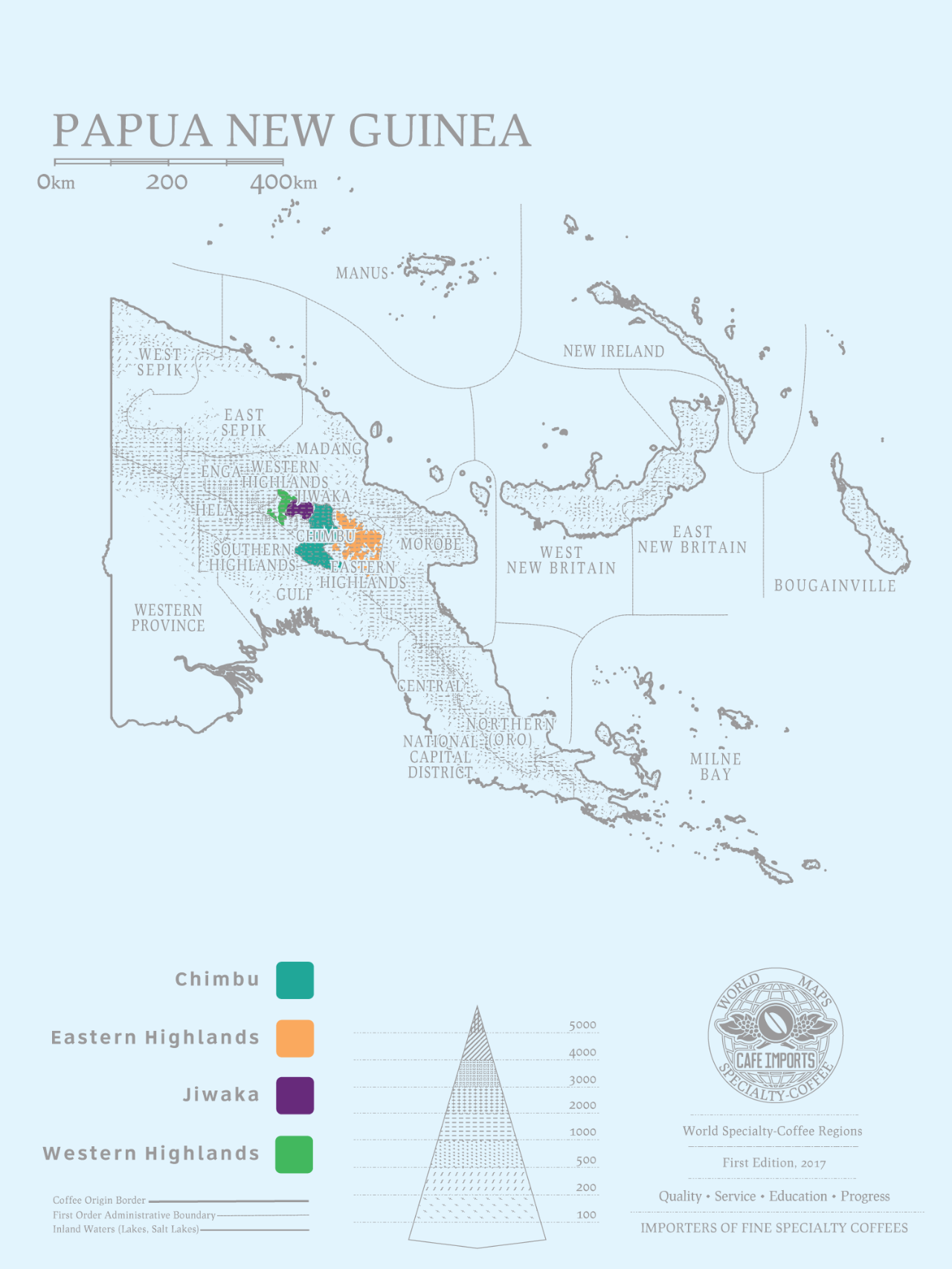
Papua New Guinea Coffee beans | introduction of Siguri Paradise Bird Coffee Bean production area. What is the relationship between Paradise Bird Coffee beans and Blue Mountain Coffee beans?
Located in Papua New Guinea, Oceania, with a detached and natural nature, unique volcanic soil and abundant rainfall provide favorable conditions for the coffee industry. In the 1930s, the British introduced iron pickup coffee from Jamaica to Papua New Guinea, and Jamaica's most representative coffee is